
Podcast/Video Interviews by Stephen Ibaraki
A Chat with Dan E. Khoo: Chief Executive Officer of the World Innovation, Technology and Services Alliance (WITSA); Past Chairman of the National Tech Association of Malaysia (PIKOM); Past Director of The Asian-Oceanian Computing Industry Organization (ASOCIO); Past President of the Southeast-Asia Information Technology Organization (SITO); former Chairman of WITSA and with Anders Halvorsen: Vice President of Global Public Policy at the World Innovation, Technology and Services Alliance (WITSA); Project Director, WITSA Global AI Index
This week, Stephen Ibaraki has an exclusive interview with Dan E. Khoo and Anders Halvorsen.
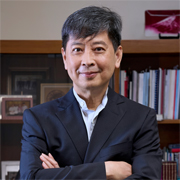 Dan E. Khoo is the Chief Executive Officer of the World Innovation, Technology and Services Alliance (WITSA), a 48-year-old alliance of tech industry associations from 80 countries and economies. As CEO, Dan has led innovative changes to WITSA's global platforms and strategic positioning with the introduction of the WITSA Global AI Index, the WITSA World Cup pitching tournament for tech scaleups; the WITSA Global AI Ecosystem Network that connects AI ecosystems in different continents; and the WITSA Global AI Summit which alternates with WITSA's flagship World Congress on Innovation and Technology (WCIT).
Born & bred in Penang, Dan has a lifelong passion for technology, strategy and entrepreneurship. His global outlook is shaped by leadership experience in Malaysia, California, Virginia, Vietnam and Hong Kong with roles in private enterprise, non-profit and the public sector. Entrepreneurship exits with a trade sale of a tech startup he founded to a Nasdaq-listed enterprise at the height of the dot-com boom and an IPO in Bursa Malaysia came after he led the creation of technology sections in two English-language newspapers.
Khoo's involvement in non-profit organizations led to stints as Chairman of the National Tech Association of Malaysia (PIKOM), Director of The Asian-Oceanian Computing Industry Organization (ASOCIO), President of the Southeast-Asia Information Technology Organization (SITO) and Chairman of WITSA. He has also served as Malaysia Digital Economy Corporation's Head of Strategy and as CEO of MDEC Americas Inc in Palo Alto, California. He has mentored hundreds of tech startup entrepreneurs from 6 continents as a Google Launchpad mentor in Silicon Valley and has won multiple awards including the WITSA Lifetime Achievement Award and PIKOM Man of the Year.
 Anders Halvorsen is Vice President of Global Public Policy at the World Innovation, Technology and Services Alliance (WITSA), a consortium of technology industry associations from more than 80 countries and economies. He has been with WITSA since 1998 and is responsible for the organization's digital technology policy, developing positions on the issues that matter to the sector and engaging on behalf of its members with the WTO, UN, OECD, World Bank, APEC, ITU, UNCTAD, ICANN and the Internet Governance Forum.
He is Project Director of the WITSA Global AI Index, launched in Taipei on 1 September 2026. The Index measures what economies have actually built rather than what they have announced, tracking 128 economies and scoring 105 of them across seven pillars, 16 sub-pillars and 83 indicators, using a composite methodology aligned to the OECD/JRC standard and validated by an independent panel of 22 experts drawn from 18 economies. Anders led the data architecture, the methodology and the review process behind it, including the formal procedure through which any economy may contest an individual indicator value. He also helped design WITSA GAIN, the Global AI Ecosystem Network, the four-tier pathway that turns each economy's results into a development plan.
His wider policy portfolio covers technology trade and AI governance, cross-border data flows, the WTO e-commerce moratorium and the Information Technology Agreement, cybersecurity and privacy, digital transformation, connectivity, internet governance and inclusion in technology. Recent publications include "Building Trust and Delivering on the Promise of Artificial Intelligence" and "Supporting Digital Trade Rules for Innovation and Sustainable Economic Development." He leads the WITSA Global Policy Action Committee, the WITSA AI Task Force and the Cybersecurity Task Force, and supports the program for WITSA's World Congress on Innovation and Technology (WCIT) and its Global AI Summits.
Before joining WITSA he worked at the Norwegian Ministry of Foreign Affairs in the Department of Foreign Economic Affairs, at the European Free Trade Association, and at the European Commission's DG XIII, covering telecommunications, information technology, industry and innovation.
He holds a master's degree in international relations and American government from Northeastern University in Boston, and is a dual U.S. and Norwegian citizen.