
Podcast/Video Interviews by Stephen Ibaraki
A Chat with George V. Neville-Neil: Author, Developer, Scientist and Educator; current co-chair of ACM's Global Engagement Board
This week, Stephen Ibaraki has an exclusive interview with George V. Neville-Neil.
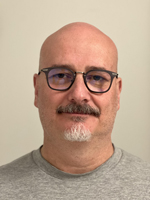 George likes to say that he, "Works on networking and operating system code for fun and profit." Writing machine code, building hardware and teaching computing since his teens, his first paid programming gig was hacking [DBase III] (https://en.wikipedia.org/wiki/DBase)code for an insurance company while still in High School. He published his first piece of commercial software, an audio digitizer for the then popular [Amiga] (https://en.wikipedia.org/wiki/Amiga) computer, while still in college.
Standing firmly at the intersection of industry and academia and due to his top ranking in the development of open source software, George has worked on research projects with several leading Universities, including: the [University of Cambridge] (https://www.cam.ac.uk/), [University of California at Santa Cruz] (https://www.ucsc.edu/), and the [University of Twente] (https://www.utwente.nl/en/) in the Netherlands. He has spent over 30 years producing commercial software for companies such as [Wind River Systems] (https://www.windriver.com/), who, along with [NASA] (https://www.nasa.gov/), put a bit of his code on Mars with each successful landing there since the [Pathfinder probe] (https://www.nasa.gov/mars-pathfinder/) in 1997.
During his tenure as a software engineer he has continued to teach in both academic and professional settings. While at [Yahoo Inc.] (https://www.yahoo.com/) in the early 2000s, developed the "Paranoid University" - a complete training program for technical and non-technical employees covering all aspects of computer and information security, from the physical layer of data centers to the logical layers of software, law and finance.
He is the author of two leading books on operating systems, the latest co-authored with [Marshall Kirk McKusick] (https://www.mckusick.com/) and [Robert N. M. Watson] (https://www.cl.cam.ac.uk/~rmw26/) of [_The Design and Implementation of the FreeBSD Operating System, 2nd Ed._] (https://www.informit.com/store/design-and-implementation-of-the-freebsd-operating-9780321968975).
For over fifteen years he has been the columnist better known as [Kode Vicious] (https://queue.acm.org/listing.cfm?typefilter=Kodevicious&sort=desc&order=full_date&qc_type=Kodevicious&article_type=&item_topic=all&filter_type=topic&page_title=Kode%20Vicious), producing the most widely read column in both of [ACM] (https://www.acm.org/)'s premier flagship magazines, [_Queue_] (https://queue.acm.org/) and [_Communications of the ACM_] (https://cacm.acm.org/). A collection of his work was published in 2020 by [Pearson] (https://www.pearson.com/), under the title [_The Kollected Kode Vicious_] (https://www.informit.com/store/kollected-kode-vicious-9780136869825) with an introduction by [Don Knuth] (https://www-cs-faculty.stanford.edu/~knuth/).
George's work with the ACM has spanned nearly two decades, working not only on Queue but also as part of their Practitioner Board, helping ACM to broaden its reach into the larger, non-academic world. As part of his work for practitioners he started ACM's only practitioner-focused conference, [Applicative] (https://applicative.acm.org/).
George is now the co-chair of ACM's Globalization Board, which he helped create as part of an ACM Presidential Task Force, and which is helping the organization expand its programs and reach to all the corners of the globe.
His work on open source started back in college, where he wrote various programs for early microcomputers and shared them under a public domain license, the predecessor to today's world of open source licenses. His early experiences with open source software included time at labs at [MIT] (https://www.mit.edu/), where he did some hacking while the original [GPL] (https://www.gnu.org/licenses/gpl-3.0.en.html) was being crafted. A brush with the [UNIX group at Berkeley] (https://en.wikipedia.org/wiki/Berkeley_Software_Distribution) in the early 90s led him to favor Berkeley's development and licensing model (the [BSD License] (https://opensource.org/license/bsd-2-clause) and he has made the majority of his open source contributions under this license and with BSD-related communities.
George has been a [FreeBSD] (https://www.freebsd.org/) committer for nearly 20 years, and has served on the elected [Core Team] (https://www.freebsd.org/administration/#t-core) which helps manage the overall project. From 2012 until 2020 he was a Director of the [FreeBSD Foundation] (https://freebsdfoundation.org/), and served one term as its President.
For commercial clients he has worked on everything from high-speed trading on Wall Street, securing device manufacturing in China, and deploying highly accurate network time protocols - including [PTP] (https://en.wikipedia.org/wiki/Precision_Time_Protocol) and [NTP] (https://en.wikipedia.org/wiki/Network_Time_Protocol) - in both finance and astronomy.
His breadth of knowledge has made him a sought-after speaker and consultant, explaining complex topics such as computer security, the Internet, computer-based timekeeping, and software engineering practices to both technical and non-technical audiences alike. His ability to bridge any knowledge or communication gap between domain experts and an audience is made apparent at his talks and when he is called upon to chair meetings among groups with radically differing backgrounds.
After a many year hiatus he returned to study in academia, accepting a PhD position at [Yale University](https://www.yale.edu/) where he is studying the structure of operating systems and modern hardware, advised by [Robert Soulé] (https://www.cs.yale.edu/homes/soule/) and [Avi Silberschatz] (https://codex.cs.yale.edu/avi/).
His scientific studies have led him to start new ventures. Not satisfied with only working in Computer Science he has recently embarked on a venture with two colleagues that looks at improving the physical sciences by changing, fundamentally, how they interact and consume compute. This work led to the founding of an FRO (Focused Research Organization), the [Independent Systems Laboratory] (https://isystemslab.com/).
Having spent years working and living in different cultures and speaking several languages, including Japanese, Dutch, French and more recently Mandarin, has given him a global perspective which he uses to move difficult projects with many stakeholders to completion - whether that's in Silicon Valley, New York, London, Amsterdam, Tokyo or Taipei, all places that he continues to call home.
His full publication list is available on [Google Scholar]
(https://scholar.google.com/citations?user=hcy9dKkAAAAJ&hl=en).