
CIPS CONNECTIONS
Podcast/Video Interviews by Stephen IbarakiA Chat with Martin E. Hellman: Professor Emeritus of Electrical Engineering and Affiliate of the Center for International Security and Cooperation Stanford University; past researcher at IBM's Watson Research Center; best known for his invention, with Diffie and Merkle, of public key cryptography; Awarded ACM Turing Award (2015)
This week, Stephen Ibaraki has an exclusive interview with Martin E. Hellman.
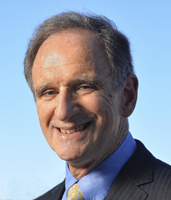 Martin E. Hellman was born in New York, NY, in 1945. He received his B.E. from New York University in 1966, and his M.S. and Ph.D. from Stanford University in 1967 and 1969, all in Electrical Engineering. Prof. Hellman was a researcher at IBM's Watson Research Center from 1968-69 and an Assistant Professor of Electrical Engineering at MIT from 1969-71. He was on Stanford's EE faculty from1971-1996, after which he went Emeritus. He served as Associate Chair of the EE Department, Chairman of EE Graduate Admissions, and as Associate Dean of Graduate Studies for minority student affairs. He has authored over 80 technical papers, 12 US patents, and a number of corresponding foreign patents.
Prof. Hellman is best known for his invention, with Diffie and Merkle, of public key cryptography. In addition to many other uses, this technology forms the basis for secure transactions on the Internet, and currently protects trillions of dollars in financial transactions every day. He has also been a long-time contributor to the computer security debate, starting with the issue of DES's key size in 1975, serving (1994-96) on the National Research Council's Committee to Study National Cryptographic Policy, and currently serving on Verified Voting's Board of Directors.
His work has been recognized by a number of awards, including the million-dollar ACM Turing Award (2015) - often likened to "a Nobel Prize for computer science." Other awards include the 1978 IEEE Information Theory Group's Best Paper Award, election as a Fellow of the IEEE (1980), the IEEE's 1981 Donald G. Fink award (best tutorial or survey paper), the Electronic Frontier Foundation 1994 Pioneer Award, the Franklin Institute's 1997 Levy Medal, selection as a Marconi International Fellow (2000), election to the National Academy of Engineering (2002), the IEEE Hamming Medal (2010), induction into the National Inventors Hall of Fame (2011), induction into the Cyber Security Hall of Fame (2012), induction as a Stanford "Engineering Hero" (2012), and induction into the Silicon Valley Hall of Fame (2013).
Prof. Hellman's professional activities have included service as a member of the Board of Governors of the IEEE Information Theory Group, chairman of the 1978 IEEE Information Theory Workshop, Associate Editor of the IEEE Transactions on Communications, and an editor of the Journal of Cryptology. He serves on the Federation of American Scientists' Board of Experts and the Scientific Advisory Board of the "Nuclear Knowledges" program at Sciences Po, France's top political science institution.
He also has a deep interest in the ethics of technological development. With Prof. Anatoly Gromyko of Moscow, he co-editedBreakthrough: Emerging New Thinking, a book published simultaneously in Russian and English in 1988 during the rapid change in Soviet-American relations. (Click for free PDF and acclaim including a former CIA Director calling it "An impressive and immensely valuable product of Soviets and Americans.") Hellman's efforts include an address delivered to the 2019 annual meeting of Nobel Laureates, "Rethinking National Security" (including a statement of support signed by a former Secretary of Defense among others) and A New Map for Relationships: Creating True Love at Home & Peace on the Planet (joint with his wife; click here for free PDF). His earlier work to develop an environment in which students of diverse backgrounds can function to the best of their ability has been recognized by three teaching awards from minority student organizations.
In his spare time, he enjoys people and finding where conventional wisdom is wrong. Before age intervened, he enjoyed soaring, hiking, and speed skating. He and his wife Dorothie have been married since 1967 and reside on the Stanford campus.